Tuesday, 3 January 2017

SPIRAL CT SCAN BHU ENABLES HIGHLY REALISTIC IMAGES

Development of Spiral CT scanning technology has been responsible for extensive use of the CAT scanning examination for study of chest, lung, and abdominal area.

Ideal for 3D imaging

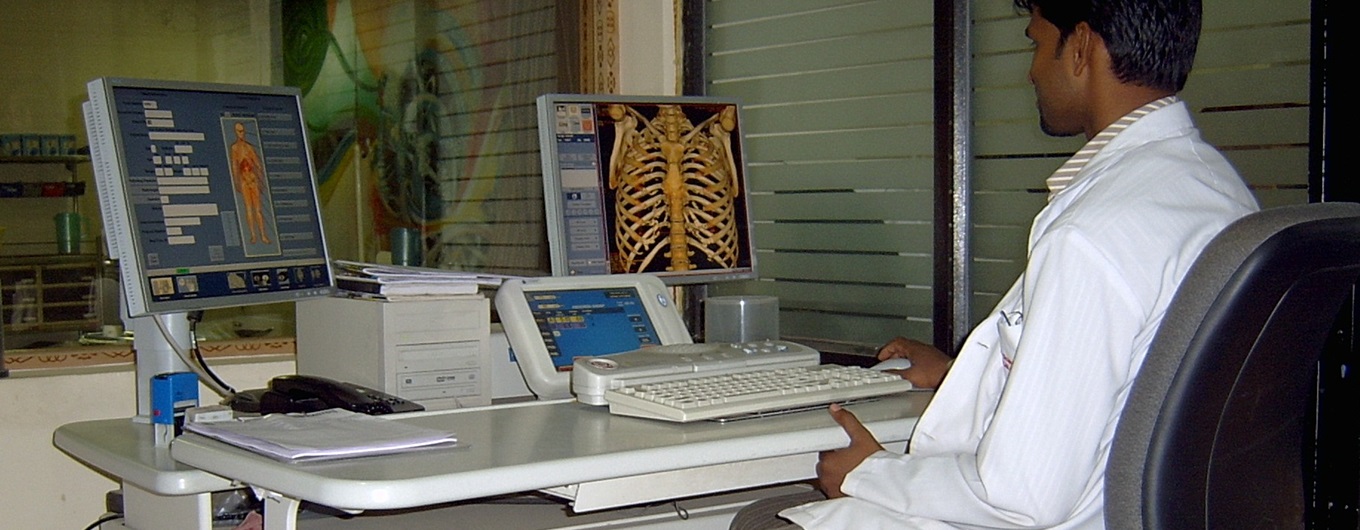
Spiral CT Scan BHU can deliver appropriate data that can be used for reconstruction of three dimensional images. Thanks to a broad spectrum of software applications and use of sophisticated computer systems, doctors are now able to access high resolution three dimensional CT images to improve their diagnostic skills.

Multiple uses of 3D CT Scanning

The advanced three dimensional reconstruction techniques can be used for performing a wide array of non-invasive endoscopic procedures. It obviates use of invasive colonoscopy while delivering equally detailed images of the colon and intestinal structure.

Multi-slice scans

Spiral CT Scan BHU is being used to generate multi-slice images that are delivered by canners that can rotate at very high speeds. These systems are designed to collect large volumes of data in the form of images. These techniques are facilitating broader range of disease and conditions that can be diagnosed by using CT Scan BHU examination.

Attributes of modern CT techniques

Development in domain of medical imaging has always been directed at enhanced patient comfort and faster procedures. CT scan BHU is no exception to this since it provides instant images without any discomfort to patients.

Thursday, 24 November 2016

UNDERSTANDING ROLE OF CT SCAN BHU

CT scan BHU is used in a wide array of disorders and diseases of human body. It is a high end medical diagnostic tool that delivers high resolution cross sectional images of the body.

Background

CT scanning has been continuously evolving since its first use in the year 1974. It is a preferred diagnostic procedure by doctors because of its accuracy and speed. CT scan is also highly convenient from patient’s point of view as it is a non-invasive procedure.

These images assist doctors to pinpoint the exact condition or location of the disease. It is also being used increasingly as a guiding tool for planning various surgical procedures including cardiac surgeries.


Basic applications of CT scanning

CT scans are used for diverse applications. These are useful for confirming primary diagnosis performed by using traditional X-ray tests or ultrasound examinations. Sometimes CT scans are conducted to understand the reason for existence of various symptoms such as chest pain, vertigo, or headache.


CT scan BHU is extremely useful to provide proper guidance to surgeons for planning precise area of the body that needs to be operated by locating position of the abnormality. It is used as substitute for exploratory surgical procedures. CT examination is used to study abnormalities of spine, sinuses, head and neck, pelvic region, brain, heart, and abdomen, just to name a few.

Wednesday, 26 October 2016

VARANASI GETS HEALTHCARE MAKEOVER WITH CT SCAN BHU FACILITY


Varanasi is a city that’s the seat of Hindu religion in India and known for its religious fervor. However, the city falls way back of others when it comes to advanced medical facilities. That’s why the opening of CT scan BHU in Varanasi is a mega development for which must be loudly applauded.

Despite the presence of medical institute like the IMU which is located within the Banaras Hindu University, patients from the region enjoyed scarce medical benefits and facilities. The focus was more on developing academic activities in the field of medical science than on providing quality healthcare. High-end medical facilities were clearly conspicuous by its absence in Varanasi.


A result PPP venture has resulted in the installation of the first CT and MRI scan system in the region. The facility is located in Sri Sunder Lal Hospital situated within the BHU complex. The project brings along multiple benefits to all concerned. It offers an economic way of getting diagnosed without having to take tortuous travel outside the state.

CT Scan BHU also offers the infrastructure asset needed for training students and developing future radiologists. As the whole set up is managed by the private sector, smooth and efficient management of the system is assured.